
Ciconia
Presentation Design
Ciconia

Get in Touch
Ciconia makes C&CAS, a system that lets crewed and uncrewed aircraft avoid each other without an air traffic controller. The aircraft talk to each other directly and resolve conflicts in the air. This is my version of their investor presentation, plus a website concept I made on my own. Most decks in this space look like a radar screen at night. I based this one on a printed aeronautical chart, the paper map pilots still carry: paper, magenta and blue chart ink, terrain tints, and tracks and altitude boxes drawn the way they are on a real chart.
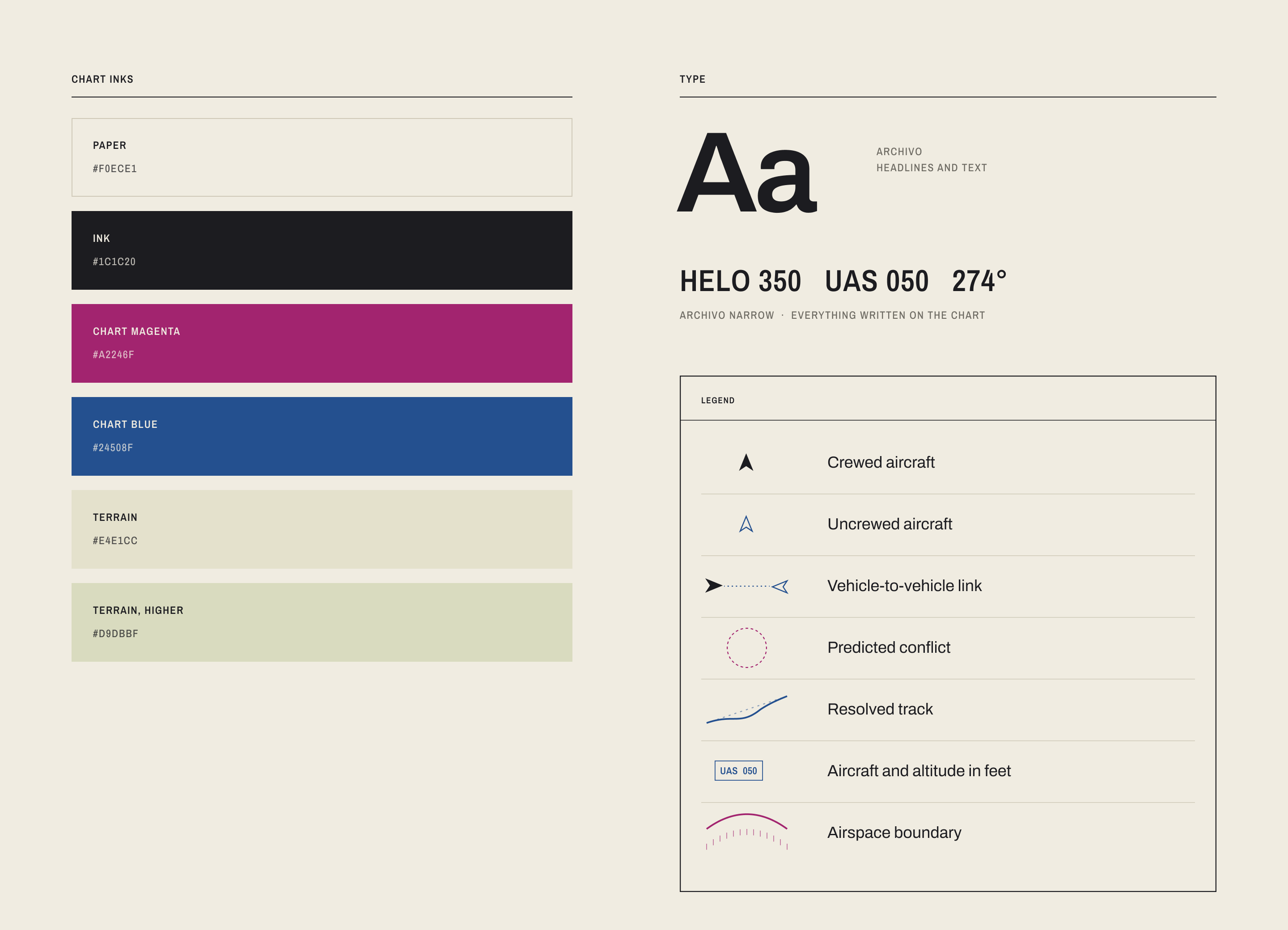
Everything in the deck is drawn with chart conventions. Magenta is for airspace boundaries and conflicts, blue is for uncrewed aircraft and their tracks, and altitude sits in a small box next to each aircraft. The legend slide explains the symbols once, so the rest of the slides don’t need to. The type is Archivo, with the narrow cut for anything written on the chart itself.
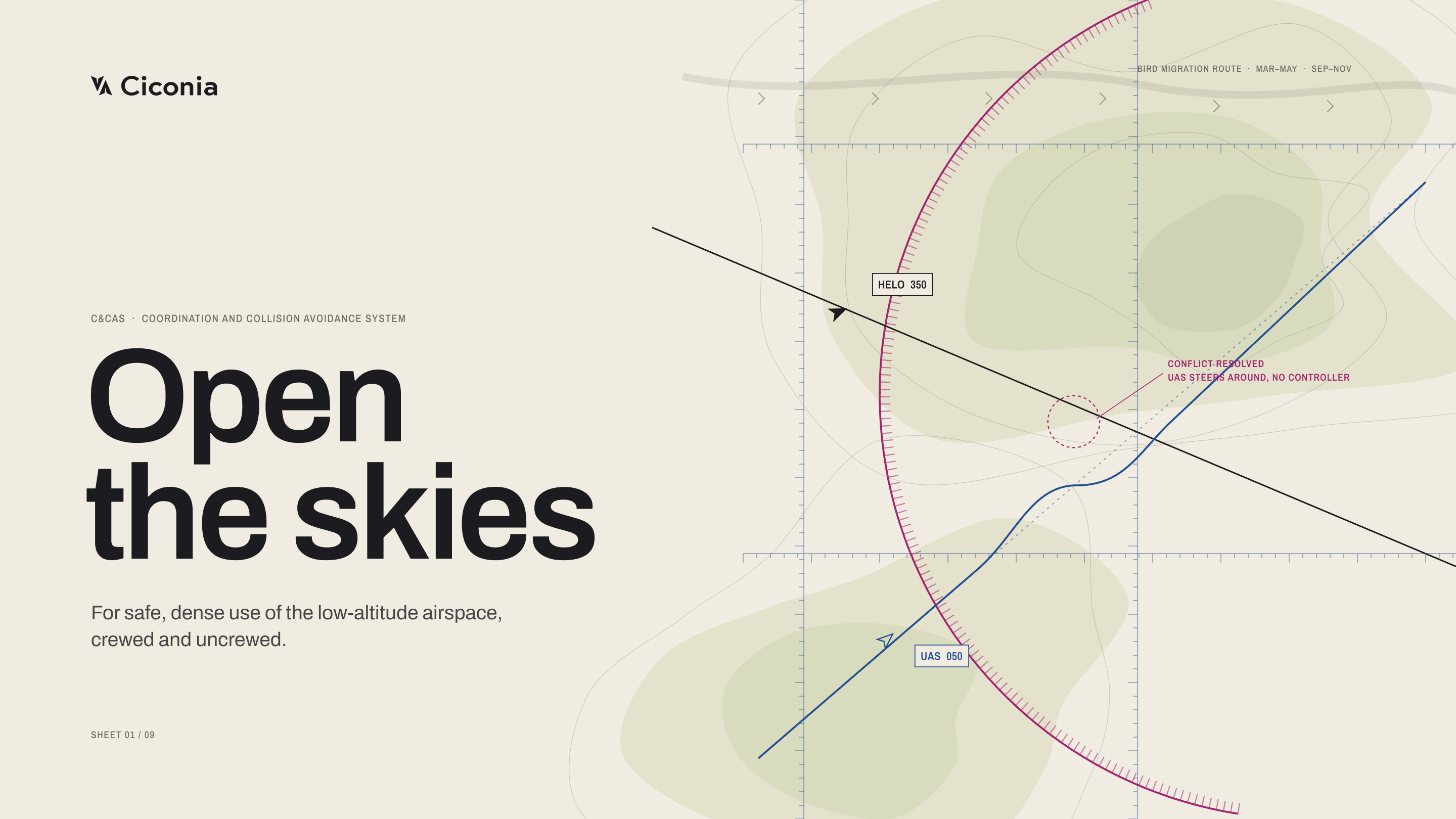
The cover is a section of the chart with a helicopter and a drone on crossing tracks, and the drone steering around it. Along the top there’s a bird migration route. Ciconia is Latin for stork, and hundreds of thousands of storks fly over Israel every spring and autumn, in dense flocks, with no one directing them.
Each slide uses a different part of the chart. The problem slide shows three encounters, from a safe distance to a collision. The vision slide is a cross-section of the low-altitude airspace, and the solution slide is the legend. The platforms slide borrows the inset boxes charts use for busy areas, one for each pair of aircraft.

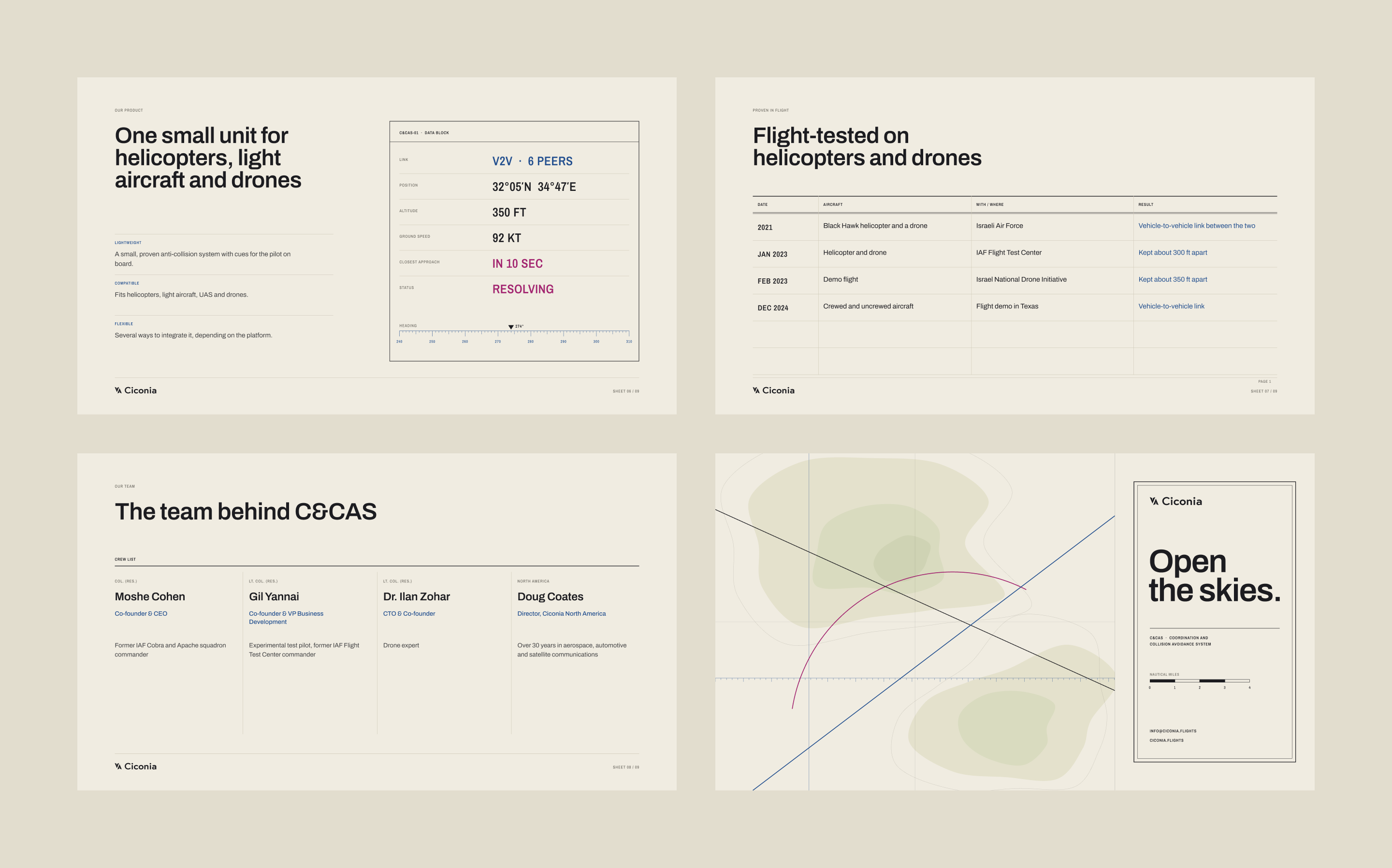
The product slide is a data block with a heading tape. The flight tests are written up like a pilot’s logbook, with a couple of empty rows left at the bottom. The last slide is the front panel of a folded chart.
The website concept uses the same sheets, rearranged for scrolling. The hero is the cover chart and the footer is the chart’s title block.
